
Keynote Speakers 2026
Keynote Speaker Ⅰ

Professor Liqiu Wang
The Hong Kong Polytechnic University, China
Brief introduction: Professor Liqiu Wang holds the Otto Poon Charitable Foundation Endowed Professor in Smart and Sustainable Energy, and is a Chair Professor of Thermal-Fluid and Energy Engineering at The Hong Kong Polytechnic University. He also serves as Director of the PolyU-Zibo Technology and Innovation Research Institute.
Drawing on over three decades of research spanning thermal fluid science, biomedical engineering, micro and nanotechnology, energy systems, and advanced manufacturing, Professor Wang is widely respected for his interdisciplinary approach that bridges fundamental physics with practical engineering solutions. His prolific output includes more than 610 peer-reviewed papers, among which over 60 appear in top-tier journals such as Nature, Science, PNAS, Advanced Materials, and Physical Review Letters. He is also author of 11 scholarly books and holds over 40 granted patents.
His work has earned global recognition: he is a Clarivate Highly Cited Researcher (top 1% worldwide) and has been listed in Stanford University's World's Top 2% Scientists. With over 28,700 citations and an h-index of 76, his influence spans both academia and industry. He is a recipient of the Optica Innovation Award, the Global Tech Innovation Award, and multiple gold and silver medals at the International Exhibition of Inventions of Geneva.
Professor Wang serves on the editorial boards of more than 30 international journals, has founded and chaired numerous major conferences, and delivered over 100 plenary or keynote lectures across the globe. He also advises governments and industrial partners on strategic research directions – bridging the gap between fundamental science and societal impact.
Speech Title: Small Drops, Giant Leaps: Precision Nanoliter Engineering
Abstract: Imagine a droplet so minute that a single liter contains a billion of them—yet each one is a perfectly engineered micro-reactor, a precise thermal manager, or a programmable building block for next-generation materials. Nanoliter droplets are rapidly transcending the boundaries of traditional wet-lab science, emerging as game-changing enablers in aerospace thermal control, automotive smart coatings, and intelligent robotic manufacturing. In this keynote address, Professor Wang will navigate the fascinating engineering journey of these microscopic marvels—from fundamental physics to transformative real-world applications. The presentation will first examine how the precise interplay of microchannel geometries, fluid properties, and dynamic flow conditions allows us to produce these droplets with uniformity and on-demand precision, turning complex fluid dynamics into a reliable manufacturing process. Moving beyond passive generation, Professor Wang will then explore advanced manipulation strategies that command these droplets with extraordinary accuracy—leveraging phase-separation phenomena, intricately designed micro-structures, and smart photo- or thermo-responsive mechanisms to direct their every move and shape their behavior on command. Finally, the talk will unveil breakthroughs that directly intersect with core engineering interests, including thermal superconducting materials that redefine heat dissipation for high-performance systems, programmable micromagnets for advanced sensors and actuators, intelligent drug-delivery microspheres, and robust anti-pathogen coatings for high-touch infrastructure. Bridging rigorous theoretical modeling with cutting-edge experimental validation, this session will demonstrate how mastering the minuscule is driving monumental progress in systems design, energy efficiency, and materials science—offering a roadmap for engineers who dare to think small to solve big challenges.
Keynote Speaker Ⅱ
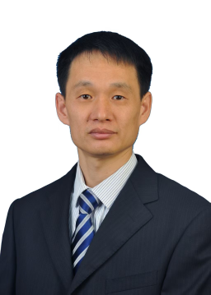
Professor Jinlu Yu
Air Force Engineering University, China
Brief introduction: Yu Jinlu, Professor and Doctoral Supervisor of Air Force Engineering University(AFEU). Engaged in research on aero-engine performance evaluation and advanced combustion. Presided over 15 projects including the National Major Science and Technology Special Program, Major Research Plan of the National Natural Science Foundation of China, Frontier Innovation Program of the Science and Technology Commission of the Central Military Commission, and Basic Enhancement Program. Awarded the Provincial and Ministerial Second-Class Prize (2025-1), authorized with 15 invention patents and published more than 60 academic papers. Shaanxi Province Special Support Program Leading Talents in Technological Innovation, Team Leader of Shaanxi Provincial University Youth Innovation Team. Head of a National Virtual Teaching and Research Room, Principal of a National First-Class Undergraduate Course, winner of Second Prize of National Teaching Achievement Award (2022-5), Outstanding Contribution Award (First Class) of the "China Heart for Aviation Power" Education Fund, and National Distinguished Young Teacher in Aviation Power.
Speech Title: Advances in Plasma-Assisted Combustion Technology for Aircraft Engines
Abstract: At present, aeroengines suffer from insufficient ignition and stable combustion boundaries at low indicated airspeed on plateaus and high altitudes, and ignition as well as stable combustion in the high-speed airflow of scramjet engines under the condition of rarefied air in near space prove to be rather challenging. Under such complex operating conditions, conventional ignition methods are unable to meet the ignition requirements of aeroengine combustion chambers. Plasma,by virtue of its temperature rise/high-temperature effect,chemical effect and aerodynamic effect, has rendered plasma-enhanced combustion technology an effective technical approach for expanding ignition boundaries and extending the range of stable combustion, and it exhibits enormous application potential in the field of aeroengine ignition and combustion support.The combustion dome based on 3D rotating gliding arc plasma is a novel and original solution in the field of plasma ignition and combustion support.This combustion dome generates 3D rotating gliding arc plasma between the fuel nozzle and the Venturi tube,which enables the atomized fuel to undergo cracking upon passing through the plasma region so as to achieve ignition and combustion support. It features the advantages of lean fuel/low-temperature ignition, an expanded combustion range, improved combustion efficiency and low energy consumption. Air plasma jet igniters and pre-combustion plasma jet igniters also serve as novel technical schemes in the field of plasma ignition. In comparison with electric spark igniters, pre-combustion plasma jet igniters can effectively shorten the ignition delay time, greatly expand the ignition boundaries and enhance the ignition reliability.